

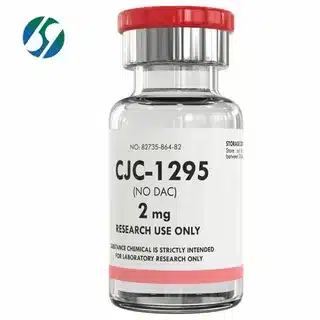
Buy CJC-1295 Without DAC Online in Australia
- Estimated Delivery : Up to 4 business days
- Free Shipping & Returns : On all orders over $200
CJC-1295 Without DAC Australia – Research–Grade Information
Researchers seeking CJC-1295 Without DAC Australia will find a high-purity synthetic peptide specifically engineered for controlled laboratory investigation of growth-hormone-releasing hormone (GHRH) pathways. Also widely known as Modified GRF (1-29) or Mod GRF 1-29, this research compound delivers a short-acting pharmacokinetic profile that closely mirrors the body’s natural growth-hormone pulses. Its design makes it a preferred tool when experimental goals center on physiological pulsatility rather than continuous elevation.
What Is CJC-1295 Without DAC?
CJC-1295 Without DAC is a 29-amino-acid analogue of the active portion of human GHRH. Four carefully chosen amino-acid substitutions—at positions 2, 8, 15 and 27—confer greater resistance to enzymatic degradation by dipeptidyl peptidase-IV (DPP-IV) while fully preserving receptor-binding affinity.
Unlike the long-acting counterpart that incorporates a Drug Affinity Complex (DAC), this version lacks the albumin-binding lysine-maleimidopropionyl extension. Consequently, its plasma half-life remains approximately 30 minutes. In research models, subcutaneous administration produces a discrete, high-amplitude growth-hormone pulse that typically returns toward baseline within two to three hours. This short window preserves the natural pulsatile rhythm and leaves somatostatin-mediated feedback intact, offering investigators a closer approximation of endogenous GHRH signaling.
Standard product specifications for research-grade material include:
- Molecular formula: C₁₅₂H₂₅₂N₄₄O₄₂
- Molecular weight: approximately 3367.9 Da
- Appearance: white to off-white lyophilized powder
- Purity: ≥98 % confirmed by HPLC
- Identity verification: mass spectrometry
- Peptide content: accurately quantified relative to salt and residual moisture
Australian research suppliers frequently supply independent certificates of analysis generated by university-affiliated proteomics laboratories. These documents typically cover endotoxin levels, residual solvents and net peptide content, enabling laboratories to confirm batch-to-batch consistency before commencing experiments.
Key Research Benefits of CJC-1295 Without DAC
Laboratory investigations have identified several practical advantages associated with the short-acting profile of CJC-1295 Without DAC Australia:
- Physiological GH Pulsatility
The brief exposure window generates sharp GH peaks that resemble endogenous nocturnal pulses. This characteristic is especially valuable for studies examining pulse amplitude, frequency, inter-pulse troughs and the subsequent cascade of insulin-like growth factor-1 (IGF-1) production. - Improved Stability Compared with Native GHRH
Native GHRH is rapidly cleaved and cleared within minutes. The four substitutions extend functional activity to roughly half an hour without eliminating clearance pathways, allowing researchers to schedule repeatable, time-controlled pulses across multi-day protocols. - Synergistic Potential with Growth-Hormone-Releasing Peptides
When examined alongside compounds such as Ipamorelin, the combination can amplify GH output through complementary receptor pathways while still respecting natural feedback mechanisms. Timed co-administration is frequently explored in research settings seeking maximal pulse height with minimal disruption of endogenous rhythms. Explore Ipamorelin research applications. - Applications in Body-Composition and Recovery Models
Elevated GH and IGF-1 pulses have been linked in preclinical work to increased protein synthesis, enhanced lipolysis and accelerated tissue-repair signalling. These endpoints make the peptide relevant for metabolic, recovery and age-related research designs. - Preservation of Receptor Sensitivity
Because receptor occupancy is intermittent rather than continuous, studies suggest a lower likelihood of GHRH-receptor downregulation compared with sustained-elevation analogues. This property supports longer experimental timelines without progressive loss of responsiveness.
Collectively these attributes position CJC-1295 Without DAC Australia as a versatile research tool when the scientific question requires acute, pulse-like GH secretion rather than chronic baseline elevation.
CJC-1295 Without DAC versus with DAC: Essential Distinctions
Understanding the structural and functional differences is critical for protocol design:
| Feature | Without DAC (Mod GRF 1-29) | With DAC |
|---|---|---|
| Half-life | ~30 minutes | 5.8–8.1 days |
| GH release pattern | Discrete physiological pulses | Sustained elevation of baseline |
| Typical research dosing | Multiple administrations per day | Once or twice weekly |
| Albumin binding | Absent | Present (covalent) |
| Preferred research focus | Pulse dynamics & GHRP synergy | Long-term IGF-1 elevation studies |
The absence of the DAC moiety is the defining feature that keeps the peptide short-acting and pharmacologically closer to native GHRH. Researchers therefore select the version according to whether their model prioritises pulsatility or prolonged exposure.
Quality and Sourcing Considerations for Australian Laboratories
When acquiring CJC-1295 Without DAC Australia, laboratories should prioritize suppliers that provide:
- Independent HPLC purity and mass-spectrometry identity data
- Quantitative endotoxin and residual-solvent testing
- Transparent reporting of net peptide content versus counterions and moisture
- Documented cold-chain shipping and storage recommendations (lyophilized material is normally stored at or below –20 °C)
Many Australian vendors collaborate with established university proteomics facilities for third-party verification. This independent testing reduces the risk of mislabeled, under-dosed or contaminated material and supports reproducible experimental outcomes. View our quality-assurance standards.
Laboratory Handling and Practical Notes
Reconstitution is performed under aseptic conditions using bacteriostatic water or an appropriate research solvent. Once reconstituted, solutions are typically refrigerated and used within validated stability windows. Administration timing in research protocols often aligns with natural GH secretory windows (for example, late evening) or is coordinated with complementary peptides.
It remains essential to emphasize that CJC-1295 Without DAC is supplied strictly for laboratory research. It is not approved by the Therapeutic Goods Administration or any other regulatory authority for human therapeutic use. Investigators must operate within institutional ethics approvals and applicable Australian regulations governing research chemicals.
Conclusion
For laboratories investigating physiological GH-pulse architecture, CJC-1295 Without DAC Australia provides a stable, short-acting GHRH analogue that offers clear experimental advantages over both native GHRH and the long-acting DAC form. High-purity material accompanied by independent certificates of analysis, combined with careful handling protocols, enables reliable and reproducible results.
Whether the research focus is pulse dynamics, IGF-1 response patterns or synergistic combinations with other peptides, this research-grade compound continues to serve as a valuable resource for Australian and international investigators. Browse related GHRH analogues or contact our research support team for current batch documentation and technical assistance.
| MG | 10mg*10vials |
|---|---|
| Cat. No | CP10 |




Reviews
There are no reviews yet.